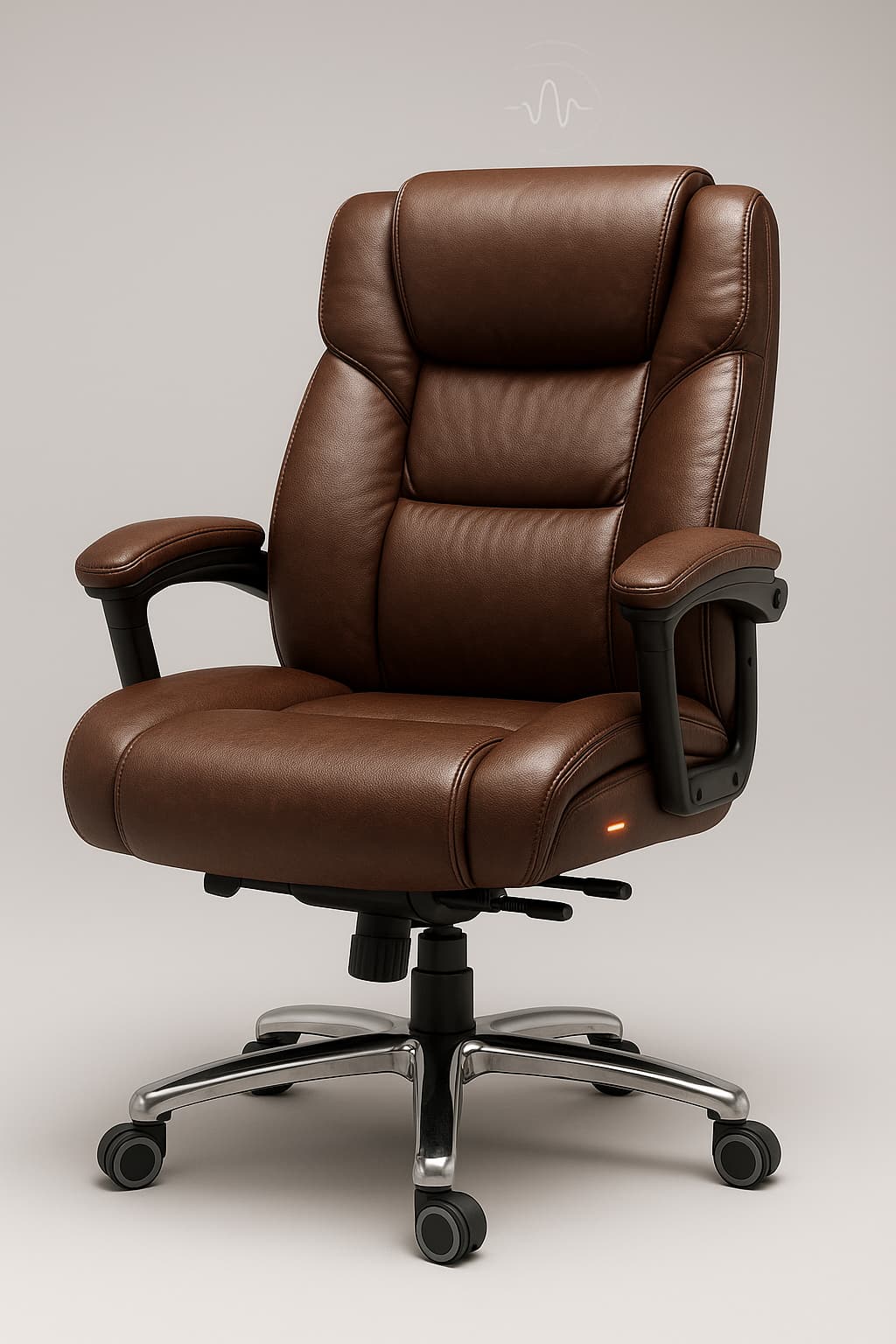
An executive office chair is not only a status piece. It is a daily work tool for long calls, focused review, writing, planning, and meetings. The right chair should match the user’s height, preferred posture, desk height, and normal work rhythm. A chair that looks impressive can still fail if the seat is too deep, the arms are too high, or the back support encourages slouching after an hour. Executive chairs often use larger silhouettes, padded backs, leather-like finishes, and polished bases. Those details can suit a private office or client-facing room, but comfort still comes first. Look for useful lumbar support, stable recline tension, supportive cushioning, and a seat shape that allows the user to sit back without pressure behind the knees. Presence should support the room, not hide poor fit. Seat height, tilt lock, recline tension, arm position, and headrest shape all affect daily comfort. Some executive chairs look adjustable but offer only basic height and tilt controls. Others provide enough tuning to fit several body types. If the chair will be shared or used in a conference office, simple and obvious controls may be more valuable than many hidden levers. Leather, bonded leather, faux leather, fabric, and mesh each behave differently. Smooth finishes look formal and clean easily, but they may feel warm during long sessions. Fabric can feel softer but needs more care around spills. Mesh can breathe well, though it may not deliver the classic executive look. Consider climate, cleaning habits, and how the chair will age under daily use. A large executive chair needs space to roll, recline, swivel, and fit under the desk. Measure the desk opening, chair mat, side storage, door swing, and visitor path. A chair that dominates a small office can make the room feel cramped. The best option should look intentional with the desk, not like a showroom piece squeezed into the wrong footprint. Executive chairs often cost more, so the frame, base, casters, gas lift, stitching, and upholstery should be judged carefully. Warranty terms matter because chairs wear through moving parts and surfaces. Check weight rating, replacement-part availability, and real maintenance expectations. A chair that can be adjusted, tightened, and cleaned easily will usually age better than a delicate chair chosen only for appearance. A chair for focused desk work may need firmer support and better arm alignment. A chair for meetings may prioritize upright posture and a polished look. A chair for a private office may need both comfort and a strong visual impression on video calls. Define the work style before comparing models so the decision does not drift toward the biggest or most dramatic option. Chair comfort depends on the desk, keyboard, monitor, lighting, flooring, and available movement. Even a strong executive chair can feel wrong if the monitor is low, the desk is too high, or casters fight with carpet. Treat the chair as one part of a complete office setup and make small adjustments after the first week. This resource explains editorial criteria, practical fit checks, office layout planning, and responsible executive chair research.
Privacy Policy
Trust, contact, and privacy information for this executive office chair support resource.